
Carpet that squelches and floors that stay wet
Soaked Carpet and Floors in Lithia Springs, GA
Soaked carpet in a Lithia Springs home needs two jobs done in order: pull the standing water out, then dry what the water soaked into. Call (678) 940-9083 to ask whether a local contractor can take the job where you live.
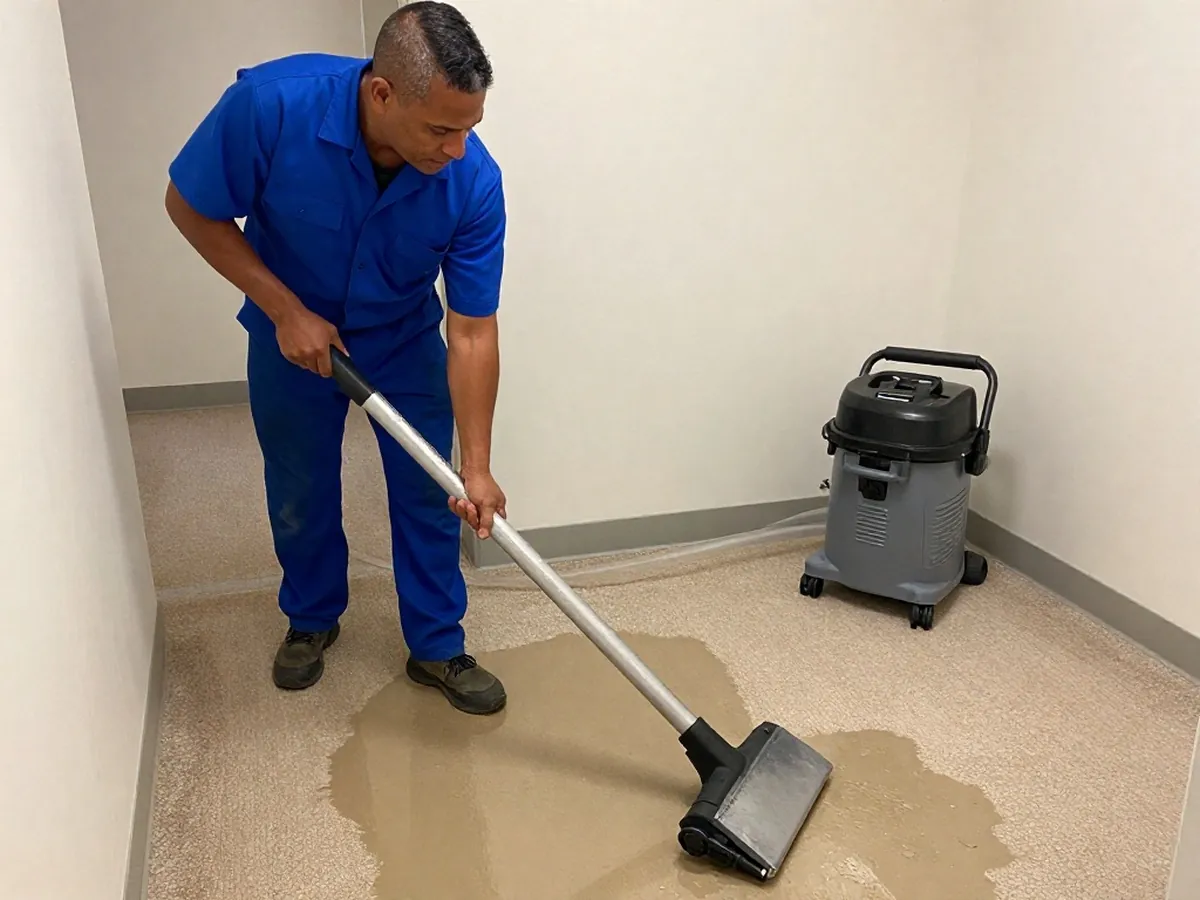
About this rendered scene
What the hallway scene shows
The rendered scene shows a technician in a blue work shirt drawing an extraction wand across soaked beige carpet in a hallway. A gray portable extractor stands beside him, with a clear hose running to the wand. The wand pulls water up out of the carpet into the machine, and the clear hose lets the operator see the water moving.
The picture is a rendered illustration of this kind of work. It is not a photograph of a real job or of a home in Lithia Springs.
Where the calendar matters
When wet floors tend to happen
Spring storms and summer cloudbursts push rain under doors and past window frames, and winter cold can split a pipe in a wall. The EPA's 24-to-48-hour advice about drying water-damaged areas does not change with the calendar, so the clock starts when the water does.
In summer, check the air conditioner's drip pan and drain line. The EPA lists both as places where moisture collects when they are dirty or blocked.
Pause and get help if
- A shock risk comes first: water lying around an outlet, a power strip or the breaker box. Stay on dry ground, flip the main only from a spot you can reach without wading, and if wiring buzzes, crackles or smells scorched, walk out and dial 911 or the power company.
- A gas odor: leave lighters, switches and flames alone, open a window only if it is on the way to the door, then step outside and reach 911 or the gas utility's emergency line from there.
- Water that surfaced through a drain or toilet is sewage until a professional says otherwise. Children and pets stay away, nobody handles it bare-handed, and anyone who touches it washes up afterward. A plumber can tell whether the clog is on your side of the meter or WSA's.
- A ceiling under the wet spot that has begun to belly, droop or drip can come down without warning. Everyone leaves that room first, and 911 is the call if any of it lets go.
Keep it or replace it
Dry it where it lies, or pull it up?
| Layer | What the sources lean toward | Who decides |
|---|---|---|
| Carpet | The EPA names carpet among porous materials that may need discarding once mold grows | The contractor, with a moisture meter |
| Pad under the carpet | The CDC puts cloth and rugs that cannot be disinfected on its throw-away list | The contractor |
| Subfloor and baseboards | The EPA says to dry all items completely | The contractor, by repeated readings |
None of the cited pages sets a drying schedule for a whole room. Readings from the meter set that.
Short answers first
Where does soaked carpet fall on a 1 to 10 scale of seriousness?
8 to 10: water touching outlets, cords or the panel, a gas smell, drain water coming up, or a sagging ceiling below. Get to dry ground then dial 911, or phone the gas utility from the yard. 4 to 7: a soaked room with the source stopped; arrange a contractor visit this week, because the EPA attaches a 24-to-48-hour mark to wet areas. 1 to 3: a damp patch from a small spill; blot it and watch it.
Does every wet layer have to come out?
No. The EPA says porous materials such as carpet may need to be thrown away if mold takes hold in them, and the CDC lists rugs and drywall among things to discard when they cannot be disinfected after floodwater. Hard surfaces are a different story: the CDC says to wash them with soap and water. The contractor decides layer by layer after taking readings.
Who deals with water running in from the street or meter?
WSA owns the meter and the lines in the road right-of-way. From the meter on to the house, the pipe is the homeowner's, and WSA's page says a plumber can learn which side a problem sits on. Water running in the street with no obvious cause goes to WSA at 770-949-7617 on weekdays or 770-942-6633 after hours.
Does this reach Douglasville and Winston as well?
Yes. Wet floors in Douglasville homes and Winston homes are handled from the same service area as Lithia Springs. Give the community and street when you call (678) 940-9083, and ask whether a contractor reaches it.
Safe looks, no tools
Everything below is a look or a sniff from dry ground. Skip any step that needs a ladder, a tool or a step into the water.
- Find the source first, such as a hose, a drain line or a window well, and stop it only if that is safe to reach.
- Press a dry paper towel onto the carpet. If it comes away wet, the pad underneath is holding water too.
- Look along the baseboards and the bottom of the wall for dark lines that show how far the water traveled.
- Photograph the room from the doorway before moving furniture, then lift small dry items out of the wet area.
Gather before dialing
By the phone before you dial about the floor
- The street address, and whether the house is in Lithia Springs, Douglasville or Winston
- The wet room and any room that shares a wall or floor with it
- Where the water began and whether it has stopped
- Photos or a short video taken before anything was moved
- Renting? Send the photos to the landlord or property manager before doing anything else
Numbers and facts for this area
- WSA is the only provider of drinking water, wastewater treatment and stormwater service in Douglas County. It lists 770-949-7617 for weekday business and 770-942-6633 for after-hours emergencies only.
- WSA's Report a Problem page puts the water and sewer lines between the meter and the house on the homeowner, and the lines in the road right-of-way on WSA. Water running down a street for no clear reason is reported by address to either number.
- Electric service depends on the address: the City of Douglasville says most of Douglas County is served by GreyStone Power (770-942-6576), while most of the city itself is served by Georgia Power.
Signs the water left behind
- Carpet that squelches or leaves wet footprints
- A cool, damp feel on a floor that ought to be dry
- Baseboards that darken or lift away from the wall
- A musty smell in a room that has been closed up
- Water marks climbing the lower edge of a wall
Before anyone starts work
Which office to ask before floor work starts
Who may do the work, and what Douglas County wants on file for repairs, are questions with their own page. The hiring questions page gathers what Georgia, Douglas County and Douglasville publish, and it names the desks to phone.
Gather the street address, the name of the wet room and some phone photos. Renting? The landlord or property manager hears first. Then call (678) 940-9083 to ask if a contractor covers Lithia Springs, Douglasville or Winston.
Call (678) 940-9083